Like something lost inside your overcoat
I’ve been listening to Chris Rea and thinking about the blues

I saw an Instagram post recently (which I can no longer find because it’s lost in the endless doomscroll) – it was a photo of Paul Simon’s Graceland on CD, minus the case, in a glovebox. The person who posted it described how, for a certain generation, it was the most iconic example of an album your parents would play in the car when you were young. They said that the disc had been handed down to them, and that they would continue to play it for their kids (for as long as they owned a car with a CD player anyway).
Those albums that you heard on long car journeys as a child are their own genre in a way. You end up knowing them intimately, better than many favourite albums from adult life. They seem to exist outside of trends and, even at the time, they often felt weirdly like relics from a different age – they may have only been released a few years ago, but that’s an aeon in childhood time.
My favourite glovebox album was Chris Rea’s New Light Through Old Windows. We had it on tape and it soundtracked countless journeys to Wales and the North East when I was young. It’s a best of compilation with a couple of re-recorded tracks, most notably ‘Driving Home for Christmas’, which was released as a B-side originally; its inclusion on the album led to it becoming a seasonal staple.
Chris Rea sadly died last month, so I thought I’d listen to the album again for the first time in maybe 30 years. I’m amazed by how well I remember it. Every nuance of production and vocal inflection is as familiar as a house key. In the silence after one song I can anticipate the intro of the next. The craftsmanship of Rea’s songwriting and the precision and expressiveness of his bluesy slide guitar playing are exceptional. I also love how the album sounds so gloriously of its era, but, clearly, it’s not the 80s of Pixies or the Cure. It belongs more to the 80s that were filled with often brilliant (and sometimes terrible) pop music which was marked by uncomplicated messaging: we will rock you, you’re simply the best. Songs that were uncool and critically unappreciated perhaps, but were wildly popular. To Morrissey, the sincerity and directness of Chris Rea’s love songs might have said nothing to him about his life. Too smooth. Too cheesy. But maybe Chris Rea just wasn’t made for those times (and, besides, sod Morrissey). After all, in the 1960s, a sincere love song could sell by the bucketload and still be cool. ‘I Want to Hold Your Hand’, ‘My Girl’, ‘Stand By Me’ – if they’d been released in the 1980s (accompanied by a Yamaha DX7 and a gated snare drum) perhaps they’d be viewed differently. The default journalistic position on punk and post-punk is that people had had enough of cerebral prog rock and silly love songs by the late 70s (as a Twitter account I set up ten years ago is keen to emphasise). A Friday night BBC 4 documentary about the 80s (complete with a montage of dole queues and the miners’ strike) is unlikely to feature ‘On the Beach’ on the soundtrack.
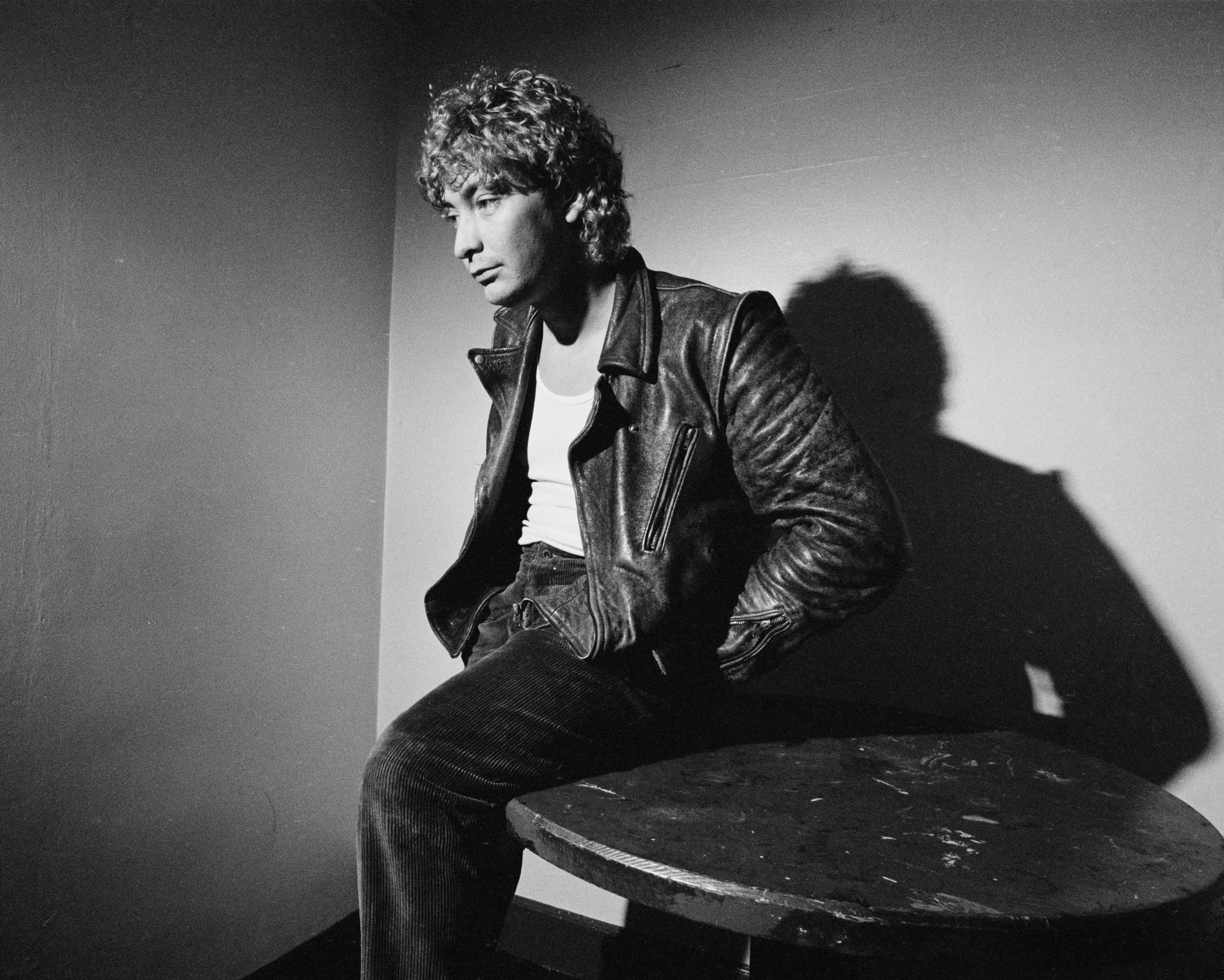
Listening to New Light Through Old Windows now, I’m struck by how similar it is to 1980s Van Morrison – indeed, ‘Driving Home for Christmas’ was originally written with Van in mind. Van could get pretty cheesy in the 80s, but there was always an edge to him, as this excellent piece by W. B. Gooderham in The Quietus attests. And if Van ever got a critical drubbing he always had Astral Weeks to back up his credentials as a ‘real artist’ (although I’d be interested to know what the reputation of Astral Weeks was in the 80s). If Chris Rea had made a spiritual masterpiece as a young man (something that I firmly believe he could have done) then his critical standing would be different. But Rea first started releasing music in the 70s, a very different decade to the 60s. A case in point – both musicians were influenced by jazz, but Van channeled this into a very late 60s melting pot of cosmic folkie grooves (hip); the jazz strain in Rea shows more of the influence of fusion and Steely Dan (less hip). One of Rea’s early albums is called Tennis (not a good name for a spiritual masterpiece).
It feels like some artists and songs date more noticeably than others. It’s often to do with production or instrumentation; it’s like there are certain sounds that have a kind of collective cultural cringe baked into them. Daniel Lopatin has trollingly called the snobbery around this ‘timbral fascism’ – a term best defined by critic Jeremy D. Larson as, ‘the idea that some vintage sounds, like chintzy new age synths, proggy rototoms, or nu-metal seven-string guitars, are forever doomed to connote some historically uncool context’. You can add raunchy slide guitar solos to that list sadly.
But of course Chris Rea played raunchy slide guitar solos. Despite being six years younger than Van, he was still very much a child of the 60s – part of the generation born in the 40s and early 50s who formed, what David Hepworth calls in Hope I Get Old Before I Die, a ‘massive army of would-be rock stars’; an army immersed in the blues and rock and roll. For these kids, blues licks weren’t clichés. The blues was part of their musical vocabulary. I’m reminded of this (often very moving) Michael Hann interview with Francis Rossi of Status Quo:
For Rossi, the boogie style – the tough, hard rock version of the 12-bar blues, exemplified by songs such as ‘Whatever You Want’ or ‘Roll Over Lay Down’ – also tied in with the shuffling Italian music he grew up with in south London. ‘There are so many things in our lives that are shuffles, even nursery rhymes – Nellie the Elephant. Our marches do that. It appealed to me and it still does.’ That was crossed with what he was hearing on the university circuit Quo were playing. ‘We used to work with Fleetwood Mac a lot on the uni circuit,’ Rossi says. ‘You could sit down beside the stage and they’d start playing – der-der, der-der – for an hour and a half. We wanted to do that, to be that.’
But then, to use the language of a BBC 4 documentary again, punk came along. And even though the musicians of the late 1970s were only a few years younger than the Beatles and the Stones, they distanced themselves from their predecessors by rejecting blues playing (feel free to sound the enormous generalisation klaxon now). No solos, no sultry, ambiguous blue notes. Guitarists instead were empowered by the power chord (empowerchorded?) – a simple shape based on only the root and fifth notes of a triad, that, once learned, allows you to play in any key without having to worry about minors and majors, let alone bluesy dominant sevenths. It’s a much simpler approach, making it possible to bash out a rudimentary version of virtually every song ever written; but, as Tony Wilson mentions in the DVD commentary for 24 Hour Party People in relation to Bernard Sumner, it also gave the guitar a new language. The power chord allowed guitarists to explore chromaticism, dissonance and riffs in a way that would be virtually impossible with full chords.
Punk – or, more accurately, post-punk – also took its non-blues cues from somewhere where there was a more pronounced generational difference, as David Stubbs writes in Future Days: Krautrock and the Building of Modern Germany:
Krautrock was paradoxical. It loathed the prevailing German pop culture of Schlager, banal drinking-to-forget songs dripping with nostalgia but in which the horrors of the Third Reich were conveniently airbrushed away. Yet it wanted to create something German in origin that was not beholden to the Anglo-American beat music or jazz traditions, so strong in West Germany after the Marshall Plan, thanks to the number of British and American troops still stationed in the country and the unrivalled potency and attraction of the Beatles, the Who, Dylan, Hendrix. These groups were adored and initially imitated by most of the Krautrock musicians themselves, as they earned their spurs in clubs and concert halls in Hamburg, Düsseldorf, Cologne. However, a broader disaffection with America’s imperial misadventures in Vietnam, which prompted a wave of student demonstrations in the late 60s, making many think again about what amounted to an Anglo-American cultural occupying force. What had once been the soundtrack of young rebellion now itself needed to be rebelled against.
What Michael Rother from Neu! called ‘the non blues, non rock-cliché new approach’ was hugely influential on music – and music criticism (and therefore what was considered cool and uncool). From German ‘kosmische musik’ to Bowie and Eno, and from Bowie and Eno to goths and New Romantics, synth- and sophisti-pop, new wave and indie.
In Rip it Up, Simon Reynolds’s fittingly named book about post-punk, there are countless references to artists wanting to distance themselves from the ‘rock and roll tradition’, as the Raincoats put it. Throbbing Gristle ‘moved beyond the agrarian blues roots of rock and created a new kind of music (or anti-music) appropriate to post-industrial society’; Television ‘created a blues-less blueprint for a cleansed, reborn rock’; Ultravox’s style was ‘based on rejecting rock’s standard “Americanisms”; Billy Currie, their keyboardist, was a classically trained viola player and determinedly avoided blues scales’. In the most extreme example, Reynolds describes No Wave music as ‘defiling rock’s corpse’, and, similarly to Tony Wilson, he talks about how more primitive approaches to guitar playing enabled musicians to escape the clichés of rock and blues music:
Ironically, a traditional blues and country technique, slide guitar, provided No Wave with some of its most disconcertingly novel noises. As used by three female guitarists – Conny Burg from Mars, Lydia Lunch in Teenage Jesus, Pat Place in Contortions – slide offered musical novices the quickest way to generate startling sounds. You didn’t even need to learn how to hold down chord shapes on the guitar strings. ‘Who wanted chords, all these progressions that have been used to death in rock?’ jeers Lunch. ‘I’d use a knife, a beer bottle… Glass gave the best sound. To this day, I still don’t know a single chord on the guitar.’
We’re a long way from Chris Rea’s slide guitar technique…
It followed that the most innovative guitarists of the 80s and 90s – Kevin Shields, Lee Ranaldo, Jonny Greenwood – also eschewed blues playing, focussing instead on dissonance, or pure texture. (The constantly shredding J. Mascis is an interesting outlier here.)
With Britpop, guitar music’s progression forward ground to a halt (although, don’t get me wrong, it also produced some great records). It was a sound mired in nostalgia: glam and new wave, with a dash of inspiration from one-offs like Squeeze and XTC. It was also a deliberate riposte to two of the most innovative recent genres of alternative music: grunge and shoegaze (both of which have aged a lot more gracefully). And, of course, Britpop harked back to the 60s – but it was more the 60s of ‘Dedicated Follower of Fashion’ than ‘You Really Got Me’; it was more Beatley than Stonesy. And while there were bluesy elements to some Britpop bands, this strand tended to get derided. Consider the (largely unfair) criticism levelled at the proficient bluesmanship of Ocean Colour Scene, or the cool response that greeted the Stone Roses’ Led Zeppelin-indebted Second Coming (I like it!). And, let’s face facts, the weakest link in the golden run of Oasis’s early singles is ‘Shakermaker’, a stodgy 12-bar blues rip off of ‘I’d Like to Teach the World to Sing’.
But even during the height of Britpop, Hepworth’s army of elder statesmen just couldn’t shake those blues. As Alexis Petridis noted about the Kinks’ 1994 album To the Bone, ‘while young bands were knocking themselves out trying to sound like the Kinks, the Kinks were knocking themselves out trying to sound like Dire Straits’.
All of the above is a very easy story to sell because it’s so neat: each generation of bands either builds on or reacts against what has come before. It doesn’t allow room for slide guitarists from Middlesborough who sing songs about cars and dancing. These received narratives feel hardwired into music criticism of a certain era, and, after an adolescence of obsessively reading the NME, it took me a while to challenge some of those assumptions. Why should it matter if something is cool or not? Is Chris Rea cool? Am I cool? Can a good album exist in a vacuum, or is an album only worthy of praise if it somehow reflects its times, or speaks to contemporary trends?
Some critical perspectives barely stand up to scrutiny. Did the blues really go out of fashion in the late 70s? What about Dr. Feelgood’s down and dirty rhythm and blues (a key touchstone for punk)? What about soul and funk? What about the rockabilly revival? What about Black Sabbath’s monolithic blues riffs and the influence they had on metal and grunge?
In today’s world, music journalism doesn’t have as much influence. There’s less gatekeeping, and, for all its many flaws, streaming has allowed a certain democratisation of listening habits, free from critical curation. Consequently, attitudes around coolness and credibility have shifted. There’s less anxiety about musicians inhabiting a genre and embracing its clichés (compare this with the Beatles’ obsessive avoidance of sounding ‘corny’). Acts like Måneskin and Yungblud have found huge audiences for their theatrical takes on classic rock, and the fact that they get bad reviews doesn’t really seem to matter. Music isn’t in dialogue with music journalism the way it was in the era of the inkies.
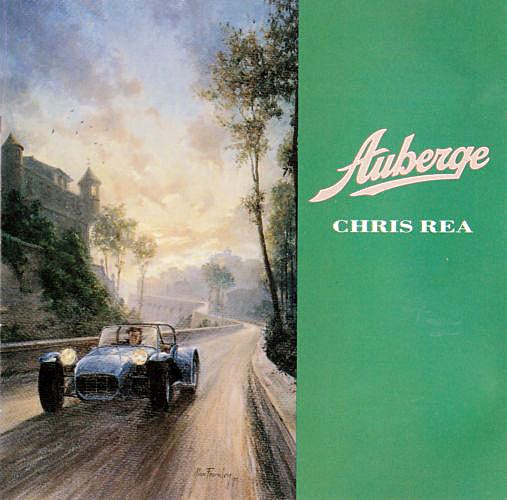
All of this is an extremely longwinded way of saying that New Light Through Old Windows is really, really good. Part of what makes the album so evocative for me is how vividly each track seems to conjure a particular world – always recognisably the 1980s, but never the 1980s you’d see in a music documentary:
‘Candles’: A man who works in telecommunications drives the woman he’s having an affair with to a Toby Carvery in a Champagne-coloured Vauxhall Omega.
‘Working on It’: A character in EastEnders has a mild breakdown (and grabs a bottle of whisky from the cupboard!).
‘Let’s Dance: A French exchange student tirelessly demonstrates his blues scales to you on a Strat copy.
‘I Can Hear Your Heartbeat’: The trucker on the highway presses through the night.
‘Steel River’: The credits roll on a Midnight Run-style crime caper.
‘Ace of Hearts’: Music to smooch too.
The last one is particularly important. This is smooching music. Do people still smooch? In wine bars, do they smooch?
But bizarre 80s vignettes from the editing suite of my mind aside, there is a palpable Van-like edge to many of Rea’s songs. Take these brilliantly evocative lines from ‘Shamrock Diaries’, which wouldn’t be out of place in a Clientele song:
And all the reasons why it started out
Hit you hard with every bell
The choir practice in the empty hall
Is a sound you know so well
Like something lost inside your overcoat
You find it later, by mistake
You lost it all a thousand years ago
And you pray it’s not too late
It’s wonderful to discover lyrics like this in slick 80s rock. I’m reminded of the positively Larkin-esque lines from ‘Fatal Hesitation’ by the terminally uncool Chris de Burgh: ‘The cafés are all deserted, the streets are wet again / There’s nothing quite like an out of season holiday town in the rain’.
There are exceptional lyrics throughout New Light Through Old Windows. Rea’s love songs are genuinely romantic, not schmaltzy. ‘I held your face as you shivered in the rain’ is a beautiful line from ‘Windy Town’. From the same song, ‘east coast cross winds on the cold wet stone’ crackles with alliteration. In ‘Candles’, Rea references Dickens: ‘Faith for reasons still unknown / Like Bleak House, fog seems everywhere’. ‘Faith for reasons still unknown’ is a fabulous multi-faceted lyric. Isn’t faith always based on unknown reasons? If you knew the reasons then it wouldn’t be faith, which is as elusive and concealing as the fog.
Rea’s songwriting is also sophisticated and ingenious. He’s well-versed in classic songwriting moves – check out the perfectly balanced question-and-answer melody in ‘Candles’ (‘Though dark our days may seem / This is a different dream’), or the undeniably uplifting shift to the relative major for the pre-chorus of ‘I Can Hear Your Heartbeat’. But the album is also full of unexpected harmonic left turns and goosebump-inducing borrowed chords. Listen to the artful move from Gm to G7 in the pre-chorus of ‘Josephine’, or the circle of fifths variation in the third verse of ‘On the Beach’.
In his later career, Chris Rea’s music leaned more heavily into his beloved blues, and he seemed to distance himself from the music he made at his commercial peak. As Alexis Petridis wrote in his excellent obituary, ‘he could be sniffy, even dismissive about the music that had made him famous, which didn’t seem entirely fair’. I don’t think it seems fair either. The songs on New Light Through Old Windows are perfectly crafted and have transcended the confines of their AOR origins. And they have seeped into my musical life in ways I hadn’t anticipated. When I heard the lines, ‘We sit up front and share a cigarette / And try to remember what we tried to forget’ in ‘Windy Town’ I realised I’d half-quoted the same lyric in one of my own songs. Don’t underestimate the power of the glovebox album to fire up your imagination.
RIP Chris Rea.
Before I go, I can’t talk about Chris Rea without mentioning Bob Mortimer’s classic tall tale about him cracking eggs in the bath on Would I Like to You?
And because Chris Rea was such a good egg(!), he took the below photo of himself for Bob Mortimer’s autobiography And Away…

If you want to support this monthly Substack, or my music, or my podcast, please feel free to donate here:
I loved this. The 80s dad car cassette is a very vivid memory for people my age. Dire Straits obviously, but also Eurythmics, Tina Turner, Huey Lewis…
I'm 52 (but American) and Chris Rea totally passed me by. I consume enough British media that I've heard his Christmas song referenced but never actually heard it. So while I was reading this I put on New Light. The interesting thing is that although I've never heard these songs before, I feel like I have. This is so much like everything that was around me as a tween and teen and in the 80s. I was more of a prog and synth pop kid (and swing and crooners) but this could easily have been the soundtrack to every movie or TV show I watched. And hearing it for the first time from this vantage point, it just sounds good. (I just looked at the track listing to be sure I hadn't heard any of these before and noticed "Fool (If You Think It's Over)," which I've definitely heard a million times without knowing who it was.)